Flex Pioneer
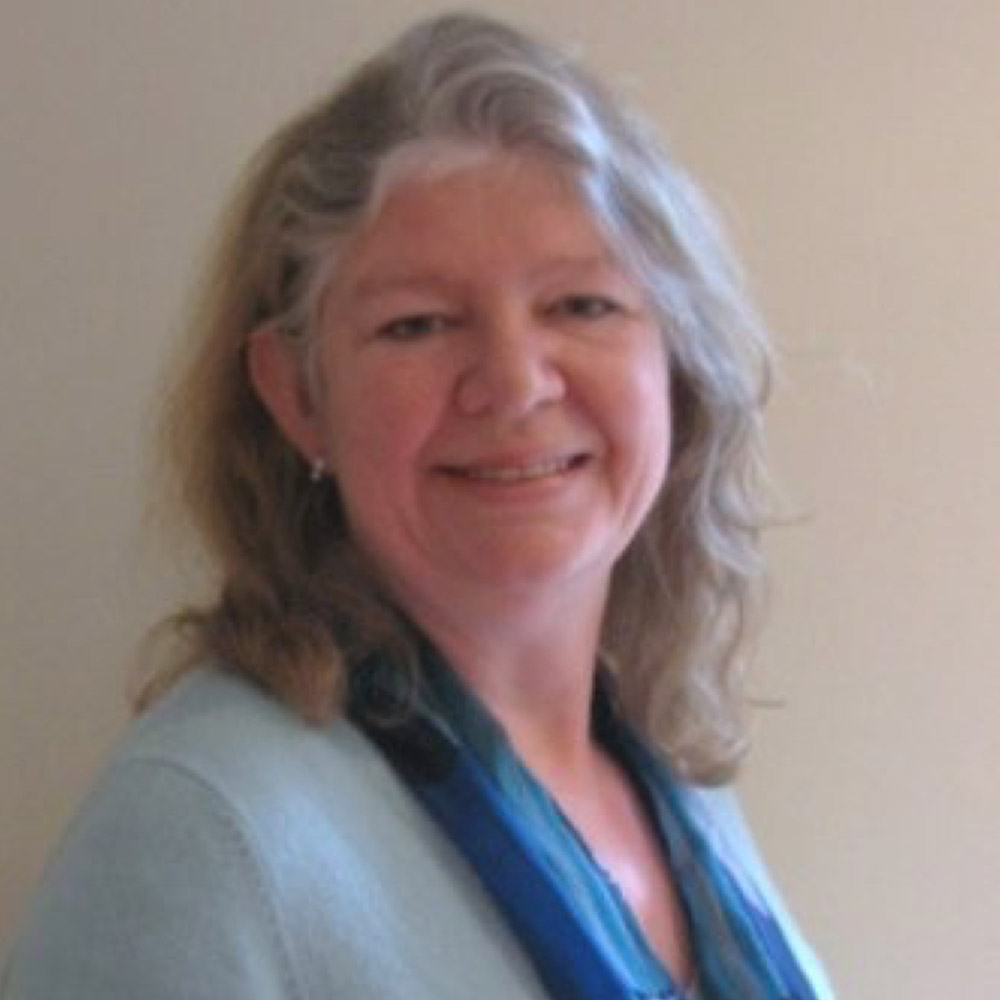
Lucy Daniels
An interview with Lucy
Lucy talks about her experiences in an 20 minute interview. Lorem ipsum dolor sit amet, consectetur adipiscing elit, sed do eiusmod tempor incididunt ut labore et dolore magna aliqua. Ut enim ad minim veniam, quis nostrud exercitation ullamco laboris nisi ut aliquip ex ea commodo consequat. Duis aute irure dolor in reprehenderit in voluptate velit esse cillum dolore eu fugiat nulla pariatur. Excepteur sint occaecat cupidatat non proident, sunt in culpa qui officia deserunt mollit anim id est laborum.
Click on the image opposite to listen to the interview and on the button below to download a transcript.
About Lucy Daniels
Early days
When her first child was born in 1981, Lucy Daniels was self-employed, working in marketing in the electronics industry. “I was very angry to discover that there was nothing [no maternity support] for people who were self-employed”. She returned to work within two weeks of childbirth, bringing her baby daughter with her, even to client meetings. In a male-dominated industry, “Nobody disapproved of me coming back to work… but as long as it didn’t impact on work… You had to pretty much pretend that you didn’t have children”. Lucy deeply felt the lack of female support networks. And also, as baby Zoe grew, she quickly realised that letting her nap in the bottom drawer of the filing cabinet was not a long-term solution to combining work and motherhood.
Hunting for solutions led her to a group of local women, The Clapham Working Mothers Group. It had begun with a few women who had met at the local branch of the National Childbirth Trust (NCT) sharing childcare advice and experiences of being judged at work. Together, they produced the Clapham Childcare Guide, and fielded calls for help and advice, left on the answerphone at the home of one of the members. Everyone was a volunteer, working together (partners too) for mutual support.
Towards national action
Demand for childcare information quickly spread beyond Clapham, and in 1982 the group published the first Working Mothers Handbook, which led Lucy to them. Groups began to be set up in other parts of the UK, and the NCT encouraged them to form an independent organisation, which in 1985 became the Working Mothers Association, with Lucy as its first paid staff member. Though the process was not straightforward: in particular, the Charity Commission challenged their founding aims, “(they) said mothers aren’t really a charitable thing – it had to be about children’s welfare… That was an interesting moment, that women weren’t worthy of support.” This institutional bias, seeing the welfare of the child as being in some way separate from and even in conflict with the welfare of the mother, was to play out over the following years, reducing, Lucy believes, the effectiveness of much that was achieved by the New Labour government around childcare and flexible working.
WMA’s first employer champion was Anne Watts, who had been appointed in 1984 as only the third Equal Opportunities Manager at NatWest bank. The bank understood that they needed to be attracting women to come back to work, they needed those skills to return. NatWest’s grant of £1,000 helped set up the fledgling campaign office. “That was a wonderful feeling, that someone took us seriously and there really were powerful women out there who thought that women needed a leg up.”
Already, the WMA’s profile was growing, and there was clearly huge demand for support and information. “Letters were flooding in from all over the country asking for the book and it was starting to be hard work answering them all, in people’s spare time.” Lucy took a briefcase full of those letters to a meeting at the Department of Health, who like the Charity Commission saw the challenges facing working mothers as a child welfare issue. “I remember putting this case on the table, and opening it, and it was wonderful because all these letters sprang out. They were so compacted that they sort of sprang out all over the table and on to the floor”. Lucy convinced the Department that as mothers returned to paid work in greater numbers, the pressure they were under to find good quality affordable childcare was increasing, and that the welfare of their children was at risk. Seed funding of £8,000 was secured.

Employers and organisational change
Lucy realised very quickly that “nothing was going to change unless we changed employers.” Systemic change had to involve them. The first Employers Guide to Childcare was published in 1986, covering the business case, maternity leave, flexible working, childcare options, and European comparisons. With influential allies like Anne Watts at NatWest, the WMA chose to take a positive approach, developing awards that recognise the employers who were going furthest and fastest to introduce policies and programmes to support their working mothers.
Political and economic drivers
Reflecting on the drivers for the increase in mothers’ employment, Lucy highlights labour shortages in the sectors which made the early running: high street banks and other retailers, and the NHS in particular. They responded by actively seeking to recruit mothers, and to retain those they already employed. She also points to the liberalisation of mortgages in the 1980s, which resulted in couples taking on greater housing debt, so that financial pressures led to more women having to work, who in earlier years might have given up paid employment when their first child was born.
Policy makers in the then Conservative governments were sceptical (“There was still a strong view that women shouldn’t work,” Lucy recalls), so campaigners reframed childcare that enabled mothers to work, as being about children’s welfare.
Expanding campaigning and policy influence
As the 80s rolled on into the 90s, Lucy engaged Conservative women’s groups and also Labour politicians. “Gordon Brown really got that childcare was an issue they needed to address.” Nevertheless, the New Labour government’s childcare strategy still framed childcare mainly as child development, not primarily as enabling women’s work. And their solutions came with unintended consequences, as nurseries and childminders adjusted their prices upwards, because parents were in receipt of new tax relief support to help pay for childcare.
And flexible working? Lucy identifies the EU as having been an important factor in how flex developed during the 80s and 90s. “The EU did a lot of work around flexible working and the need for flexibility, on the one hand to help in countries with falling demographics – so they were saying you’d better watch out, you need to be flexible to attract women returners who are willing to work part time. On the other hand, it might well be in countries with population explosions, that flexible working is a way of more fairly divvying out work. Jobsharing and things to give people the opportunity to splice their lives between employment and non-employment.”
On the other hand, she feels that the trades unions lagged behind. “They were very anti flexible working and they weren’t really supportive of the childcare and they really let women down in those years. There were one or two people working very hard behind the scenes but not at the national level. I remember going to a conference at flexible working at the TUC where the speakers were heckled by real dinosaurs who were saying, what are you doing? Flexible working? They saw it entirely as a threat to the male traditional working model. And of course in some cases that was with justification. We’ve seen the impact of the gig economy and for many people flexible working is a bad word not a good word. But I think they totally missed the fact that this was, that they were very screening out anybody who couldn’t work full time, with their very blinkered attitude.”
Continuing challenges
Lucy sees with disappointment ongoing wasted female talent due to lack of affordable childcare and structural inflexibility. She argues today, as she has always done, that we need a strategic reconfiguration of work across life stages: childcare, eldercare, disability support, and youth employment. As long as flexibility continues to be treated as an individual accommodation, not a systemic employer strategy, real change will never come. “It’s still very much left to individual women to negotiate if they want to work part time and it’s seen as something given to them if the employer is willing. Companies aren’t saying flexible working has to be part of our strategy for recruiting and retaining people. I think particularly as we become an aging workforce, an aging community, because let’s face it a lot of women are voting with their feet and are not having children at all, partly because they know it is very, very hard to juggle and that’s a cost of doing nothing that the government needs to think about. We are going to need more and more people who are willing to work flexibly into later life, in order
Perpectives on flex
Lucy Daniels also provided an in-depth hour long interview (date). You can download a transcript below.
Lorem ipsum dolor sit amet, consectetur adipiscing elit. Morbi nibh mi, fringilla quis augue quis, euismod bibendum augue. In fermentum mollis mi, ac placerat nunc interdum at sit amet varius ante eros id eros. Sed maximus finibus lacinia. Sed sagittis viverra nisl nec sagittis.
Aenean ultrices libero iaculis erat condimentum, a ullamcorper sapien volutpat. Nam cursus justo ac augue convallis condimentum. Pellentesque nisl lacus, aliquam nec pretium sollicitudin, molestie vel purus. Morbi ut laoreet nisl. Vivamus orci felis, convallis id metus et, vestibulum volutpat mi. Maecenas vel nibh at velit sagittis ornare. Nullam sapien ante, congue eu velit ac, scelerisque lobortis magna.
Lucy Daniel’s biography
Lucy Daniels was the founding Director of what is now Working Families, and was a leading campaigner and researcher on flexible working for 30 years.
Her career began in marketing, in the electronics industry in the 1970s. The challenges of combining motherhood with earning an income led her to the local support found in the Clapham Working Mothers Group. The group’s reach and influence saw their pioneering Working Mothers Handbook distributed to over 25,000 women, and other local groups spring up across the UK. In 1985, Lucy became the Founding Director of the new Working Mothers Association (WMA).
Lucy established the WMA as the essential source of support for working mothers, via its helpline and publications; as a trusted partner for leading employers, convincing businesses and public sector bodies of the value of introducing family friendly employment practices; and as an influential voice in the development of government policy around childcare and flexible working.
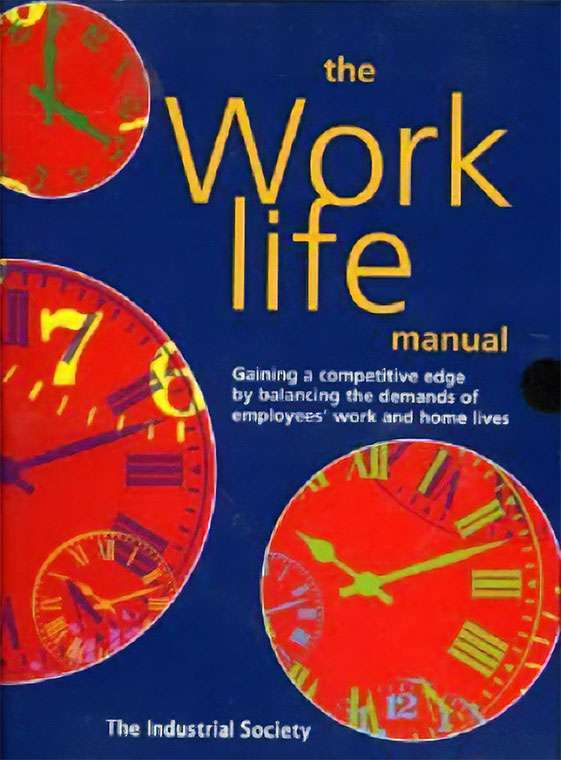
Lucy’s publications
Lucy Daniels, Lucy McCarraher
Industrial Society, 30 May 2003
Business & Economics, 82 pages
No organisation survives without the commitment, expertise and creativity of its people. Respecting their need for work-life balance, and finding innovative ways of organising work to make it possible, is vital. Evidence shows it results in direct bottom-line benefits. Developing a work-life strategy for your organisation is about creating a “win-win”. It’s about finding working practices that will best meet operational needs and customer requirements together with those of employees. The video focusses on typical work-life dilemmas. The central action takes place in a management training session in which people from different organisations discusses the barriers and opportunities to adopting new ways of working. The video encourages viewers to see that two-way flexibility can help both individuals and the organisation. Some of the elements discussed are: flexible working hours, work redesign teams, employee development, teleworking etc. The Work-life manual includes further checklists and case studies to help employers develop their work-life strategies. The facilitators guide – detailed sessions gives you the flexibility to tailormake workshops for all levels in the organisation: line managers, project managers, union representatives and senior management. Changing times, the TUC booklet, outlines a unique process for managers and union representatives who wish to work in partnership to implement work-life strategies.